The Quiet Party: How Canada's Introverts Built a Social Life That Doesn't Require Leaving the Block
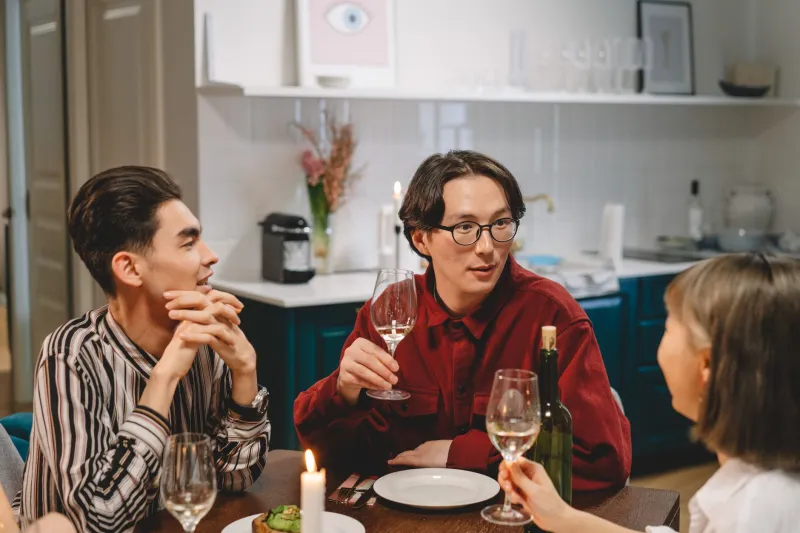
On a Friday night in a semi-detached house in east-end Toronto, eight people are gathered around a dining room table that's been cleared to make room for five different bottles of Scotch whisky, a printed tasting guide, and a handwritten playlist on a cue card. Nobody is shouting. Nobody is waiting for a bartender. The host — a 35-year-old software developer named Ben who describes himself as "genuinely allergic to small talk" — is explaining the difference between a Speyside and an Islay malt to a group of people who are actually listening.
This is not a party. Or rather, it is — just not one that shows up on anyone's social media feed.
The Rise of the Micro-Scene
Across Canada, a quiet but unmistakable shift is happening in how a certain kind of person is choosing to socialize. Introverts — long assumed to simply opt out of nightlife rather than reshape it — are building their own versions of it. They're hosting supper clubs in Halifax apartments, running book-and-wine evenings in Calgary basements, organizing neighbourhood cheese tastings in Vancouver living rooms, and creating whisky circles in Toronto kitchens.
The gatherings tend to be small (usually six to twelve people), intentionally structured (there's often a theme or a loose agenda), and deliberately intimate in a way that a bar or club simply cannot replicate. They're not replacements for going out, exactly. They're something different — a parallel social infrastructure built by people who find the standard nightlife template exhausting rather than energizing.
"I spent years feeling like something was wrong with me because I couldn't enjoy a night out the way everyone else seemed to," says Simone, 32, who hosts a monthly "slow dinner" in her Montreal apartment where guests are asked to leave their phones in a basket by the door. "Eventually I just decided to create the kind of social life I actually wanted instead of forcing myself into one that didn't fit."
What's Actually Driving This
The pandemic accelerated a lot of things, and the introvert social renaissance is one of them. Years of home-based socializing — the Zoom happy hours, the backyard bubbles, the small-scale kitchen gatherings — gave a lot of Canadians permission to interrogate what they actually enjoyed about social life versus what they'd been doing out of habit or obligation.
For many, the answer was uncomfortable. The bar wasn't the point. The connection was the point. And it turned out connection could happen just as well — often better — in someone's living room with a bottle of natural wine and a real conversation than it could in a loud venue with a $18 cocktail.
There's also a financial reality at play. In most major Canadian cities, a night out has become genuinely expensive. Cover charges, drinks priced to reflect rent costs, the cab or rideshare home — a regular bar night can easily run $80 to $120 per person. A hosted whisky tasting or supper club, costs shared among guests, can deliver a richer experience for a fraction of that.
"I started my little wine night because I couldn't afford to go out every week," admits Fiona, 28, who hosts a rotating gathering of six friends in her Kitchener apartment. "Now I wouldn't trade it for anything. We've had some of the best conversations of my life at that table."
How These Gatherings Actually Work
The micro-social scene has its own loose grammar. Most successful recurring gatherings share a few common elements: a clear format, a manageable guest list, and a host who's genuinely invested in the experience rather than just looking to fill their calendar.
Theme nights are popular because they give people something to engage with beyond the social performance of just showing up. A whisky tasting gives you something to talk about. A supper club where everyone brings a dish tied to a memory creates instant storytelling. A neighbourhood film screening followed by discussion — something a handful of Winnipeg residents have been running out of a shared garage space — turns passive viewing into active connection.
Guest curation matters more than most hosts initially expect. "The first time I invited too many people I didn't know well and the energy was just off," says Ben, the Toronto whisky host. "Now I'm pretty intentional. Everyone has to know at least one other person in the room. It sounds controlling but it's the difference between a good night and a great one."
Most hosts also describe keeping the gatherings phone-light or phone-free as one of their best decisions. "When people aren't documenting everything, they're actually present," says Simone. "It changes the whole atmosphere."
The Introvert's Advantage
There's a certain irony in the fact that introverts — people who are culturally assumed to be bad at socializing — are often the most thoughtful and deliberate architects of social experience. Precisely because they find large, unstructured social situations draining, they tend to put real thought into creating environments where connection can actually happen.
The playlists are curated. The guest lists are considered. The format is designed to reduce the awkward "so what do you do" opening volley that burns so much social energy in conventional settings. The result is often an evening that feels less like a party and more like a genuinely good time.
"I've made closer friends through these little gatherings than I made in years of going out," says Kenji, 37, who co-hosts a monthly "kitchen lab" dinner in his Edmonton home where guests are assigned to cook one component of the meal. "There's something about working alongside someone in a kitchen that skips all the surface stuff."
A Challenge to Bar Culture (Sort Of)
None of this is to say that the bar is dead or that these micro-scenes are in competition with Canada's nightlife industry. Many of the people running these gatherings still go out — they just do it more selectively, and they no longer rely on bars and clubs to be the primary site of their social lives.
What the movement does challenge is the assumption that real social life happens in licensed, commercial spaces — that you need to go somewhere to properly connect with people. For a growing number of Canadians, the neighbourhood, the living room, and the backyard are where the most meaningful social experiences are being built.
Starting Your Own
If any of this sounds appealing, the barrier to entry is genuinely low. Pick a format that interests you (a tasting, a dinner, a film night, a book discussion — whatever you'd actually enjoy hosting). Invite six to eight people. Keep it loose enough to breathe but structured enough that nobody feels stranded in a conversation they don't know how to enter. Do it again next month.
The best micro-scenes in Canada didn't start with a manifesto. They started with one person who decided to stop waiting for the perfect night out and just made one.
You don't have to leave your neighbourhood to find your people. Sometimes they're already there, waiting for someone to open the door.