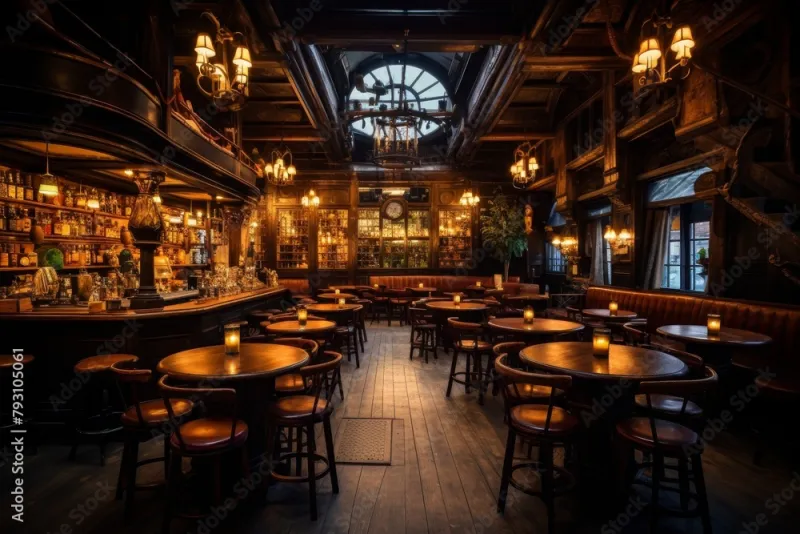
Table for One, Please: The Quiet Revolution of Going Out Alone in Canada

Let's be honest about something. The group chat has been "planning" this night out for three weeks. Someone keeps saying Thursday works. Someone else is "probably in." There's a poll that expired. And right now, at 7:30 on a Friday evening, you're sitting in your apartment fully dressed with nowhere to go and a slowly curdling sense of frustration.
Here's a thought: go anyway.
Across Canada — from the wine bars of Halifax to the cocktail lounges of Calgary to the late-night ramen spots of Vancouver — a quiet but unmistakable shift is happening. More adults are choosing to go out alone. Not because their friends bailed. Not as a last resort. On purpose. As a preference. As a form of self-care that doesn't involve a face mask or a meditation app.
And they're having, by many accounts, some of the best nights of their lives.
The Pressure We Don't Talk About
There's a particular kind of social obligation that Canadians are especially susceptible to — the assumption that going out requires a group, that solo presence signals loneliness, that a table for one is something to be pitied rather than chosen.
It's nonsense, but it's deeply embedded. We've built our nightlife culture around the idea that fun is a collective activity, that a night out is only worth having if it's witnessed and shared. Social media has made this worse. Nobody's posting a selfie captioned "just me at the bar, and it was genuinely lovely."
But that's starting to change.
"I used to feel like I needed to have a reason," says Jess, a 34-year-old graphic designer from Ottawa who started going to concerts and restaurants alone about two years ago. "Now I just go. And I don't owe anyone an explanation for wanting to be somewhere without having to manage a group dynamic."
That phrase — manage a group dynamic — comes up a lot in conversations about solo outings. Because that's what a significant portion of a night out with others actually involves: coordination, compromise, waiting for people, worrying about whether everyone is having fun. It's not nothing. Sometimes it's exhausting.
What Actually Happens When You Go Alone
The first fifteen minutes are the hardest. This is the window where every insecurity shows up, where you wonder if the bartender is judging you, where you reach for your phone as a social prop.
And then something shifts.
Without the buffer of a group, you become more present. You notice the room differently. You overhear conversations. You make eye contact with the bartender in a way that actually leads somewhere — a recommendation, a story, sometimes a genuinely good chat with a stranger who turns out to be fascinating.
"When I'm with friends, I'm basically in a bubble," says Marcus, a 29-year-old teacher from Winnipeg who started going to live music events solo after a breakup. "Alone, I'm actually part of the room. I've met more interesting people in the last year than in the five years before it."
This is not a coincidence. Solo presence is socially legible in a specific way: it signals openness. People are more likely to approach you, talk to you, include you in their conversation when you're not already encircled by a group. The solo night out is, paradoxically, often a more social experience than the group one.
The Cities Getting It Right
Some Canadian cities are better suited to the solo night out than others, and the gap is narrowing.
Vancouver's bar culture — particularly in neighbourhoods like Mount Pleasant and Gastown — has quietly normalized the solo diner and solo drinker. Counter seating is abundant, bartenders tend to be genuinely conversational, and nobody looks twice at a person sitting alone with a book and a natural wine.
Toronto is trickier — the city's scale can feel alienating — but the smaller, neighbourhood-level spots in Leslieville, Roncesvalles, and the Junction have a warmth that rewards the solo visitor willing to become a regular.
Montréal, arguably, is the easiest city in the country to be alone in public without it feeling lonely. The culture there has always been more comfortable with solitude as an aesthetic rather than a deficit.
Redefining What Friendship Actually Looks Like
Here's the part that might be the most interesting: going out alone doesn't weaken your friendships. For a lot of people, it strengthens them.
When you stop relying on your social circle to provide every form of entertainment and stimulation, you stop resenting them when they can't. You show up to actual plans refreshed rather than depleted. You have things to talk about — experiences that are genuinely yours, not shared and filtered through the group's collective narrative.
"My friendships got better when I stopped needing them to be everything," says Dara, a 38-year-old nurse from Edmonton. "Now when we do go out together, I actually want to be there. I'm not going because I was afraid to be alone."
That distinction — choosing presence versus defaulting to it — is the whole thing. It's the difference between a night out that means something and one that just fills the calendar.
How to Actually Do It
If you've never gone out alone intentionally, start small. A solo dinner at a restaurant you've been curious about. A live music set at a bar where you can stand near the stage. A late-night walk through a neighbourhood that ends at a cocktail bar you've always passed but never entered.
Leave your phone in your pocket for at least the first twenty minutes. Order something you actually want. Tell the bartender it's your first time there. Let the night be whatever it turns out to be.
You might love it. You might find it uncomfortable in a way that teaches you something. Either way, you went. You made a choice. You owned the night on your own terms.
That's not sad. That's actually kind of powerful.