The Last Hour: What Canadians Actually Talk About When the Bar Is About to Close
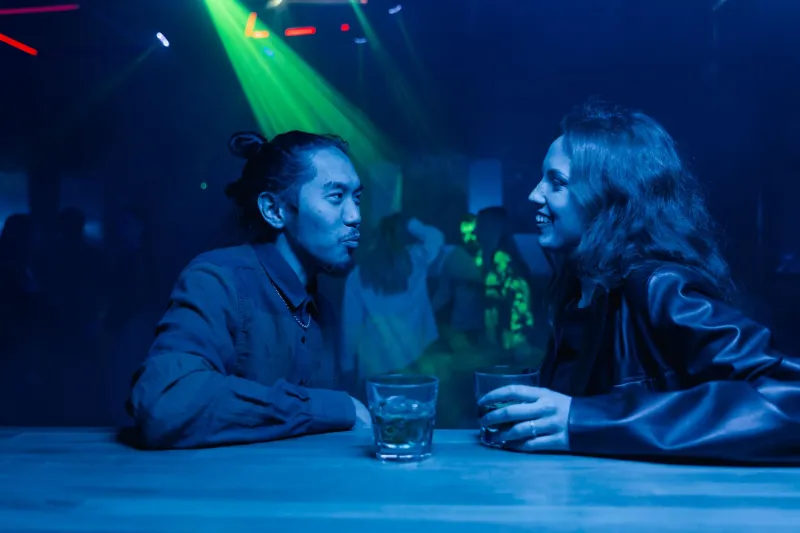
There's a version of a night out that exists only in the last hour. The music is still going, but the crowd has thinned. The earlier, performative energy — the looking-around, the posturing, the careful construction of a good time — has mostly dissolved. What's left is something rawer. A few people leaning close over a sticky table, talking like the conversation actually matters.
If you've been out in Canada long enough, you know exactly what this feels like. And you probably remember more of those late-night conversations than you remember the nights that were objectively "better."
Why the Clock Changes Everything
There's a psychological concept sometimes called "temporal scarcity" — the idea that when we know something is ending, we start treating it differently. We get more present. More honest. Less concerned with impression management.
Apply that to a night out and it explains a lot. When last call is thirty minutes away, the stakes of a conversation somehow drop. You're not building toward anything. You're not performing. The night is wrapping up and whatever you say now exists mostly in that room, in that hour, between these specific people.
"It's like the pressure valve releases," says Théodore, a bartender at a brasserie in Montreal's Plateau neighbourhood who has been working late-night shifts for almost a decade. "Before midnight, people are trying to have a good time. After 1 AM, people are actually having one — or they're finally being honest about the fact that they're not."
The Unofficial Confessional
Ask around and you'll find that an almost absurd number of significant personal revelations have happened at Canadian bars in the final hour of service. The friend who finally admitted she was leaving her marriage. The colleague who confessed he'd been miserable at his job for three years. The woman who told a stranger she'd been carrying a grief she hadn't spoken out loud to anyone yet.
Bars have always functioned as a kind of informal confessional — there's a reason the phrase "liquid courage" exists. But the late-night bar is a specific, heightened version of that space. The ambient noise creates privacy. The dim lighting creates intimacy. The alcohol has had time to do its work. And crucially, the loosening of social formality that happens over the course of an evening reaches its peak in those final hours.
"People tell me things at the end of the night that I'm certain they haven't told their closest friends," says Théodore. "Not because they're drunk, necessarily, but because something about that hour makes honesty feel more possible."
What We're Actually Talking About
The topics that surface at 1:30 AM in Canadian bars follow a recognizable pattern. Loneliness comes up constantly — not in a dramatic way, but in the quiet, matter-of-fact way that suggests people have been sitting with it for a while. Relationships get dissected. Career doubts get aired. Fears about the future, about whether the life someone is building is actually the life they want — these conversations happen with a regularity that might surprise you if you've only ever experienced the earlier, shinier part of the night.
In cities like Toronto and Vancouver, where the cost of living has created genuine anxiety about whether a fulfilling life is even financially achievable, those conversations carry extra weight. "We talk about money a lot," says Keisha, 29, a regular at a bar near her Scarborough neighbourhood. "Not in a bragging way. In a scared way. In a 'do you ever feel like we're all just barely keeping up' way. It's the only place I feel like I can say that without it being a thing."
In Quebec, where the cultural relationship with nightlife and socializing runs deep, the late-night bar conversation has an almost philosophical quality. "We debate," says Camille, 33, from Quebec City. "Politics, relationships, what a good life looks like. It sounds pretentious but it's not — it's just what you do when you've been drinking wine for four hours and the night is almost over."
Strangers Who Become Something Else
Some of the most remarkable late-night conversations happen between people who didn't know each other at the start of the evening. There's a particular alchemy that can occur when two strangers end up side by side near closing time — they have no shared history to protect, no reputation to maintain, no relationship to manage. They can be completely honest in a way that's genuinely difficult with the people who know them best.
"I had a conversation with a woman I'd never met at a bar in Edmonton," says Raj, 36. "We talked for maybe forty-five minutes about whether we'd made the right choices in our thirties. I don't even know her name. But I think about that conversation more than I think about most conversations I've had with people I've known for years."
Bartenders across the country describe witnessing these exchanges constantly. They've learned to read the shift — the moment when two strangers stop making small talk and start actually talking. "You can see it happen," says Nadia, who works at a bar in Winnipeg's Exchange District. "The body language changes. They stop looking around the room. Whatever was performative just drops."
What It Says About Us
The fact that so many Canadians use the late-night bar as a space for genuine emotional expression says something interesting about where we're getting our connection needs met — and where we're not.
We are, by most measures, a country dealing with real loneliness. Statistics Canada has been tracking declining social connection for years, a trend that accelerated sharply after the pandemic. Therapy waitlists are long. Community infrastructure has thinned. The informal third places where people used to gather regularly — churches, community halls, neighbourhood spots — have become less central to daily life for many Canadians.
What fills the gap, apparently, is the bar at 1:30 in the morning. It's imperfect. It's temporary. It's often forgotten by noon the next day. But in the moment, it works. It provides the intimacy, the permission, the sense of being genuinely heard that a lot of people are hungry for.
The Morning After
Here's the bittersweet part: most of those conversations don't survive the night. Not because they weren't real, but because the context that made them possible — the hour, the atmosphere, the lowered defences — doesn't transfer easily into daylight.
But maybe that's okay. Maybe the point of the 2 AM conversation isn't to build something lasting. Maybe the point is simply to have it. To say the thing out loud. To be heard by someone, even temporarily. To remember, for a few hours in a bar somewhere in Canada, that you're not the only one carrying whatever you're carrying.
The lights come up. Last call is called. The night ends.
And somehow, that was exactly what you needed.