Flying Solo at Your Favourite Bar: How to Own the Room When Nobody Shows Up

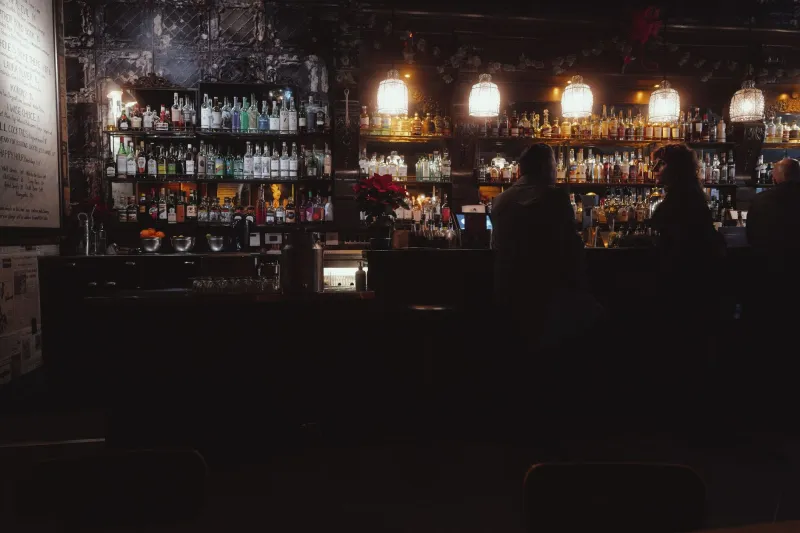
You push open the door. You scan left, then right. You do that thing where you pretend to check your phone so it looks like you have a reason to pause near the entrance. Nothing. No familiar jacket, no wave from across the room, no bartender catching your eye with that hey, you're back nod. Just a sea of strangers who all seem to know each other just fine without you.
Welcome to the awkward walk-in — one of the most quietly universal experiences in Canadian nightlife, and one that almost nobody talks about.
Friend groups are scattered across different neighbourhoods now. Schedules are a mess. That crew you used to hit Ossington with every other Friday? Half of them moved to the suburbs. The girls from your old job? Two are on mat leave, one relocated to Calgary. The result is that more and more Canadians are showing up to their regular haunts and finding themselves completely anonymous in a place that used to feel like an extension of their living room.
So what do you actually do?
The First Thirty Seconds Are the Hardest
Let's be honest — that initial scan of the room is brutal. Your brain is running a quick threat assessment, asking whether this is a "stay and figure it out" situation or a "text the group chat and bail" situation. Most people bail. They walk in, clock the room, and reverse out before anyone notices.
But here's the thing: almost everyone in that bar has done the same awkward walk-in at some point. The strangers you're looking at? A solid chunk of them arrived solo or with one other person and are doing their own version of looking comfortable while feeling slightly adrift.
Give yourself ninety seconds before you make any decisions. Seriously. Ninety seconds is enough time to find a spot at the bar, order something, and let your nervous system settle. The night almost always looks different once you have a drink in your hand and a stool under you.
Claim Your Territory Early
Regulars know this instinctively: position matters. If you've been coming to a place long enough to call it your spot, you already know where you like to sit. The corner of the bar near the taps. The high-top by the window. Whatever it is — go there. Sitting somewhere familiar in an unfamiliar crowd is a small but genuinely effective psychological reset.
It also signals something to the staff, who are often your best allies in this scenario. A good bartender notices when a regular comes in solo. They'll check in more often, maybe introduce you to someone at the bar, or at minimum give you the kind of easy, low-pressure conversation that makes an empty night feel less empty. Tip well. Be a person, not just an order. That relationship is worth more than most people realize.
The Stay-or-Bail Calculus
There's no shame in leaving. If the vibe is completely off — wrong crowd, wrong energy, wrong everything — cutting your losses and finding somewhere else is a totally valid move. Forcing yourself to sit in discomfort for three hours because you already paid for parking is not a personality trait worth developing.
But before you go, run through a quick mental checklist. Are you leaving because the night genuinely has nothing to offer, or are you leaving because you're uncomfortable and discomfort feels like a sign? Those are very different things. Discomfort fades. A night spent scrolling your phone at home because you bailed too fast tends to linger a little longer.
If the bar itself still feels right — the music is good, the space is comfortable, the drinks are solid — stay. Give it an hour. Worst case, you have a quiet drink and head home early. Best case, something unexpected happens.
Solo Nightlife Is Actually an Underrated Skill
Canadians tend to be pretty socially self-conscious, which means going out alone carries more stigma here than it probably should. There's this unspoken assumption that if you're at a bar by yourself, something went wrong. But spend any time in cities like Montréal, Vancouver, or Toronto and you'll notice that the most interesting people in any room are often the ones who came in without a group and stayed anyway.
Solo nightlife forces you to actually be present. You're not managing group dynamics or waiting for someone to finish a story before you can flag the server. You're just there, paying attention, open to whatever the night decides to hand you. Some of the best conversations happen when you're not performing for an audience you already know.
A few things that make it easier: bring something low-key to do if you want a buffer — a book, a notebook, even just genuinely engaging with your phone for a bit rather than using it as a prop. Order something you actually want to drink slowly and enjoy. And resist the urge to explain yourself. You don't owe anyone a reason for being somewhere alone.
When Your Spot Doesn't Feel Like Your Spot Anymore
Sometimes the awkward walk-in isn't really about one bad night. Sometimes it's a signal that a place has changed, or you have, or both. Bars evolve. Ownership changes. The crowd that made a place feel like home gets replaced by a younger demographic or a different scene entirely, and suddenly your regular haunt feels weirdly foreign.
This is worth paying attention to. If you keep showing up and keep feeling like a stranger, it might be time to find a new regular spot rather than chasing a version of the place that no longer exists. That's not a loss — it's just how nightlife works. Cities shift, scenes move, and the search for a new local is honestly one of the more fun parts of being someone who actually goes out.
The Night Belongs to You Either Way
Here's the reframe that actually helps: the awkward walk-in is only awkward if you decide it is. Nobody in that bar is tracking your entrance as closely as you think. They're busy with their own nights, their own conversations, their own version of figuring it out.
You showed up. That already puts you ahead of everyone who stayed home debating whether to go out. The rest is just details.
Order your drink. Find your seat. Let the night do its thing.