Stop Playing Cupid: The Hidden Cost of Being Your Friend Group's Hype Woman
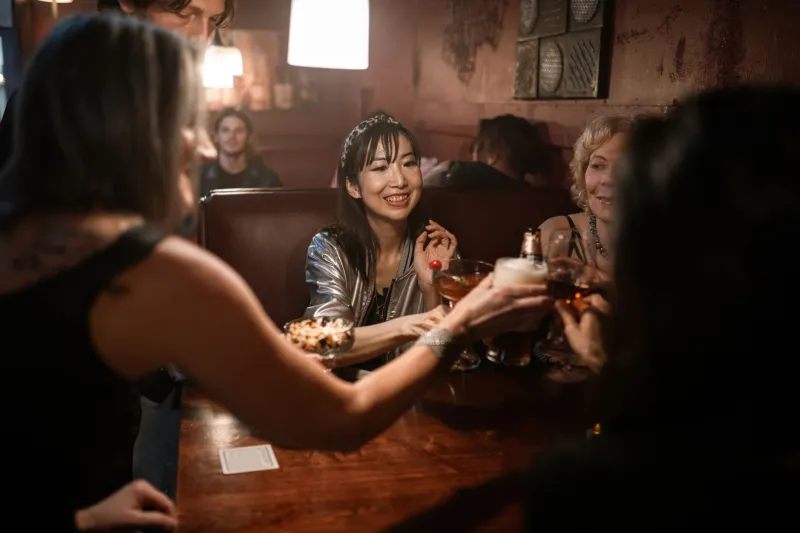
It starts innocently enough. You're at a bar in Calgary with your crew, drinks are flowing, and you spot someone across the room who is absolutely your friend Jess's type. Before your own glass is even half-empty, you're over there, leading with "my friend is hilarious, you have to meet her." By midnight, Jess has a number saved in her phone and you're splitting a cab home alone, scrolling through nothing.
This is the wingwoman paradox — and Canadian women are living it more than they'd like to admit.
The Unspoken Job Nobody Applied For
Across Toronto, Vancouver, Montreal, and everywhere in between, there's usually one woman in every friend group who has quietly accepted an unofficial role: the connector. She remembers what everyone's looking for in a partner. She reads the room. She starts conversations on behalf of people who are too nervous to start their own. She is, in short, excellent at dating — for other people.
"I genuinely didn't notice I was doing it for years," says Mara, 31, from Ottawa. "I'd go out with the intention of having my own night and I'd end up being everyone's publicist. I was pitching my friends to strangers like I was their agent."
The role often falls to whoever is the most socially confident in the group — the one who doesn't freeze up when approaching someone new, who can work a room without making it weird. And in many Canadian social circles, that person gets quietly volunteered for the job without anyone ever saying the words out loud.
Why We Do It (And Why It Feels Good, At First)
Here's the thing: being a good wingwoman feels genuinely great in the moment. There's a real hit of satisfaction in engineering a connection that works. When your friend texts you the next morning with heart emojis because the person you introduced her to asked her out, that feels like a win.
Psychologists would call this a prosocial behaviour loop. You help someone, you feel good, you do it again. In Canadian culture specifically — where we tend to pride ourselves on being accommodating, community-minded, and not "too much" — prioritizing other people's needs over your own gets coded as a virtue.
"We're raised to not take up too much space," says Danielle, 28, from Halifax. "So when you're out and you could either pursue something for yourself or help a friend, choosing yourself can feel almost selfish. Even though it's completely not."
When the Hype Becomes a Habit
The problem isn't the occasional wingwoman moment. It's when the role becomes so ingrained that you stop even considering your own prospects as part of the night's agenda.
Some women describe a kind of automatic redirect — the moment they feel a flicker of interest in someone, their brain immediately starts calculating whether that person might be a better match for one of their friends. Others say they've used the wingwoman role as a form of emotional protection: if you're busy facilitating everyone else's romantic possibilities, you never have to sit with the vulnerability of pursuing your own.
"I realized I was using it as a shield," admits Priya, 34, from Mississauga. "It's easier to be brave for someone else than for yourself. If I put Jess forward and it doesn't work out, I don't feel rejected. If I put myself forward and it doesn't work out, that stings."
This is the paradox in its sharpest form. The very social skills that make someone an incredible wingwoman — empathy, confidence, the ability to read what someone else needs — are exactly the skills that would make her great at dating. She just rarely deploys them for herself.
What Bartenders Are Noticing
People who work behind the bar tend to see patterns that the rest of us miss. Marcus, a bartender at a Queen West spot in Toronto who asked to keep his last name out of it, has been watching this dynamic for years.
"You can spot it pretty quickly," he says. "There's always one woman who's doing all the heavy lifting socially and she's usually the last one to get approached or to approach anyone herself. It's like she's taken herself off the market for the night without realizing it."
He's also noticed something else: the wingwoman often ends up having the most interesting conversations of the night — with him, with strangers, with random people at the bar — because she's so busy facilitating for others that she ends up everywhere except in a focused, one-on-one exchange with someone she's actually interested in.
Reclaiming Your Own Night (Without Ditching Your Friends)
None of this means you have to stop being a good friend. It means building in some intentionality before the night begins.
Several women interviewed for this piece described making what they call a "personal first" rule: before you engineer anything for anyone else, you have to at least acknowledge your own interest in the room. That might be as simple as letting yourself notice someone without immediately pivoting to "but Jess would love him."
Others talked about having direct conversations with their friend groups — genuinely direct, not Canadian-polite-direct — about redistributing the social labour. "I told my friends I needed them to have my back the way I always had theirs," says Mara. "It was awkward for about five minutes and then it completely changed our nights out."
You can also give yourself permission to simply opt out of the matchmaking for a night. Your friends are adults. They can introduce themselves.
The Bigger Picture
The wingwoman paradox is really a story about how women are socialized to make themselves useful in social spaces — to justify their presence by providing value to others rather than simply existing and enjoying themselves.
Recognizing that pattern is the first step to changing it. You are allowed to go out and be the main character of your own night. You are allowed to want something for yourself in a room full of people. You are allowed to be your own hype person, for once.
The friends who matter will still be your friends. And who knows — when you stop playing everyone else's Cupid, you might actually have time to meet someone worth keeping your own number for.