Last Call for Real Talk: The Conversations That Only Happen After Midnight in Canada
Photo: Internet Archive Book Images, No restrictions, via Wikimedia Commons
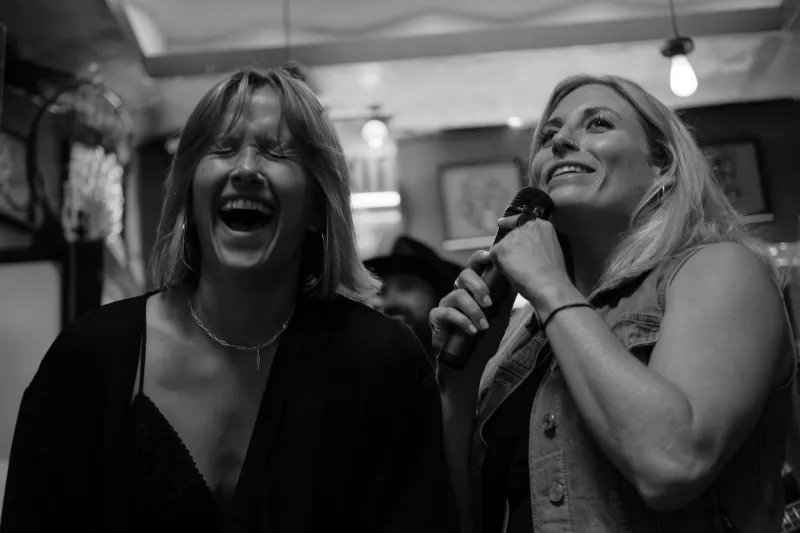
Ask anyone about their best bar conversation and they'll describe the same conditions: it was late, the crowd had thinned, the music had softened just enough to hear each other without leaning in, and somehow — without planning it — someone said something real. Something they actually meant.
This is the alchemy of the 2 AM conversation. It's not unique to Canada, but it takes on a particular shape here — informed by our cultural instinct to keep things pleasant, our tendency to understate, and our deeply held belief that being emotionally transparent is somehow an imposition on other people. When those walls finally come down, what spills out is often startling in its honesty.
The Canadian Politeness Problem (and Its Cure)
Canadians are famously, sometimes frustratingly, polite. We apologize reflexively. We soften our opinions. We ask how you're doing and fully expect the answer to be "good, thanks" rather than an actual answer.
This social contract serves us well in most settings. But it also means we carry around a lot of unspoken things. Ambitions we haven't voiced because they sound too big. Regrets we haven't processed because processing them out loud feels indulgent. Feelings about relationships — friendships, romantic partnerships, family dynamics — that we've kept carefully below the surface.
The bar after midnight is where that contract quietly expires.
"There's a predictable shift that happens around 1, 1:30," says Kezia, a bartender who has worked late-night shifts at a Halifax bar for five years. "The people who are still there at that point aren't there for the drinks anymore. They're there because the conversation got good. You can see it in their body language — they lean in, they stop checking their phones. Something real is happening at that table."
What People Actually Talk About
It's rarely what you'd expect from the earlier part of the evening. The conversation that started with weekend plans and work complaints has usually transformed by midnight into something with more weight.
Ambition and the gap between where we are and where we thought we'd be comes up constantly, according to bartenders and late-night regulars across the country. The question "what did you actually want to do with your life?" — asked genuinely, without judgment — can open a conversation that lasts until the lights come up.
"I was out with two girlfriends last spring," says Amara, a 31-year-old teacher from Winnipeg. "We'd known each other for ten years. And at like 1:30 in the morning, one of them just said, 'I think I made the wrong career choice and I don't know what to do about it.' We'd never talked about anything like that before. We ended up staying until close and I feel like I know her better now than I did after a decade of brunches."
Relationships — in all their complicated forms — are the other great late-night subject. Not gossip, necessarily, but genuine examination. The friendship that's been quietly fraying. The romantic relationship that's comfortable but maybe not right. The family member you don't know how to reach anymore. These subjects require a certain social permission to surface, and the late-night bar grants it.
Regret, handled carefully, shows up too. Not the wallowing kind, but the reflective kind — the "I wonder what would have happened if" conversations that require enough distance from the day-to-day to feel safe.
Why Bars Specifically
Therapists and sociologists would point to several converging factors that make bars — particularly quieter, later-stage bars — fertile ground for genuine conversation.
The physical environment matters. Low lighting reduces self-consciousness. Side-by-side seating at a bar creates a configuration where you're not quite facing each other directly, which research suggests makes difficult conversations easier — the same reason driving is often the setting for meaningful talks.
The social permission granted by "we're out" matters too. The bar is a designated space for being off-duty, which extends to emotional availability. You've already signalled that tonight is for connection, which makes deeper connection feel less like an ambush.
And yes, alcohol plays a role — not in manufacturing feelings that don't exist, but in reducing the social friction that usually keeps those feelings contained. The 2 AM conversation isn't an illusion. It's just a version of you with fewer editorial filters.
The Bartender as Witness
Nobody has a better view of this phenomenon than the people behind the bar.
"I'm essentially invisible after a certain point," says Marcus, who tends bar at a long-running lounge in Calgary. "And I mean that in the best way. People forget I'm there and they just... talk. I've heard things I know those people have never said out loud before. Job losses they haven't told their families about. Proposals they're planning. Grief they're carrying. I take that seriously. It's a kind of trust."
Most experienced bartenders develop an intuitive sense of when to check in and when to disappear. They can read the emotional register of a table — whether it's celebratory or heavy — and calibrate their presence accordingly. It's a skill that goes largely unacknowledged but creates the conditions for conversations that matter.
The Safety of the Space
Certain bars earn a particular reputation as safe spaces for honest talk — and it's not accidental. It comes from years of cultivating a specific atmosphere: staff who don't hover, lighting that doesn't interrogate, music that creates a sound buffer without overwhelming, and a crowd that's generally there for the same reason you are.
In communities across Canada — in the queer bars of Vancouver's Davie Street, in the long-running women-forward spots in Toronto's east end, in the neighbourhood pubs that double as community living rooms in smaller cities — this kind of space has been deliberately built and fiercely protected.
Because the 2 AM conversation isn't just entertainment. For a lot of people, it's the only place in their week where they say what they actually think.
What You Carry Home
The strange thing about these conversations is that they often feel slightly unreal in the daylight. You'll wake up the next morning and remember what was said — the admission, the revelation, the moment of unexpected honesty — and wonder if it counted.
It did. It does.
The connections made in those late-night hours are often the most durable ones. Not despite the vulnerability, but because of it. You saw each other differently. You said something true. And now you carry that knowledge of each other forward into every ordinary interaction that follows.
Sometimes the best thing a night out gives you isn't the party. It's the conversation you didn't know you needed to have — found somewhere between the last round and the lights coming up, in a bar that held the space for it.